Superbug That Baffled Scientists for a Decade Solved by AI in Just Two Days
AI News 24/02/2025 23:31
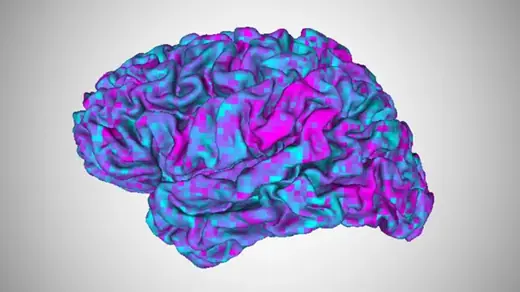
Artificial Intelligence (AI) is making significant strides in reading human thoughts, with a groundbreaking technology that can decode thoughts through a quick brain scan—without requiring extensive training.
According to Live Science, scientists have upgraded an AI-powered brain decoder that can rapidly and effectively convert thoughts into text. This innovation has the potential to assist individuals with aphasia, a disorder that affects the ability to communicate.
Previously, brain decoders used machine learning to translate brain signals into text based on how the brain responds to spoken language. However, older technology required hours of training for each individual, making it impractical. With the new approach, the AI decoder can function immediately on a different person's brain after a single quick scan, eliminating the need for large training datasets.
In a study published on February 6 in Current Biology, researchers at the University of Texas, led by Alexander Huth and Jerry Tang, developed a method that enables the decoder to work across multiple individuals without specialized training.
The research team created two transformation algorithms, allowing the AI brain decoder to be trained on one group of people and then transferred for use on another group.
This process consists of two steps. First, the decoder is trained on a reference group by scanning their brains using MRI while they listen to 10 hours of radio stories. Next, the transformation algorithm is applied to a target group of participants using two methods: either by having them listen to 70 minutes of radio stories to collect brain response data or by having them watch 70 minutes of Pixar short films (which do not involve language) to analyze how their brains react to visual stimuli.
By aligning brain function responses, scientists can map how the brain processes different types of information. This enables the decoder to transfer from the reference group to the target group and function immediately without additional data collection.
The research team tested the decoder on individuals who had never heard the test stories before. While the accuracy was higher for the original reference group, the AI's decoded thoughts still captured the overall semantic meaning of the original ideas.
For example, in a conversation describing an undesirable job, the original story stated:
"I am a waiter at an ice cream shop. I don’t know what I want to do, but I know for sure it’s not this."
Meanwhile, the AI predicted:
"I worked a job that I thought was boring. I had to take orders and didn’t like it, so I worked every day."
Although the AI was unable to decode every word with perfect accuracy, it successfully grasped the overall idea the person was thinking.
Another fascinating discovery was that the decoder functioned even when training data came from silent videos. This demonstrates that the brain can interpret information in a consistent way, regardless of whether it comes from language or visuals.
"It’s amazing that we can do this without needing direct language data," researcher Huth told Live Science. This breakthrough could be crucial in aiding individuals who have lost the ability to speak by using visual data to develop a brain decoder.
Scientists believe this decoder could provide significant benefits to patients with aphasia, allowing them to express their thoughts without speaking. By using videos as input data, AI could create a communication system independent of traditional language.
"This study shows that the brain can represent certain concepts in a general way, regardless of whether they are presented through language or images," said Yukiyasu Kamitani, a neuroscientist at Kyoto University in Japan.
If this technology continues to develop, it could revolutionize human communication—especially for those who have lost speech due to strokes, brain injuries, or neurological disorders.
Currently, the research team is testing the decoder on individuals with aphasia, aiming to create a system that allows them to express thoughts through AI.
If successful, this technology could mark an unprecedented breakthrough in neurocommunication. Using AI to read and interpret thoughts could not only help people with language disorders but also pave the way for a future where humans communicate without spoken words.