Series of Ultimatums Sent to U.S. Federal Employees and Musk’s Surprising Explanation
Elon Musk 24/02/2025 23:28
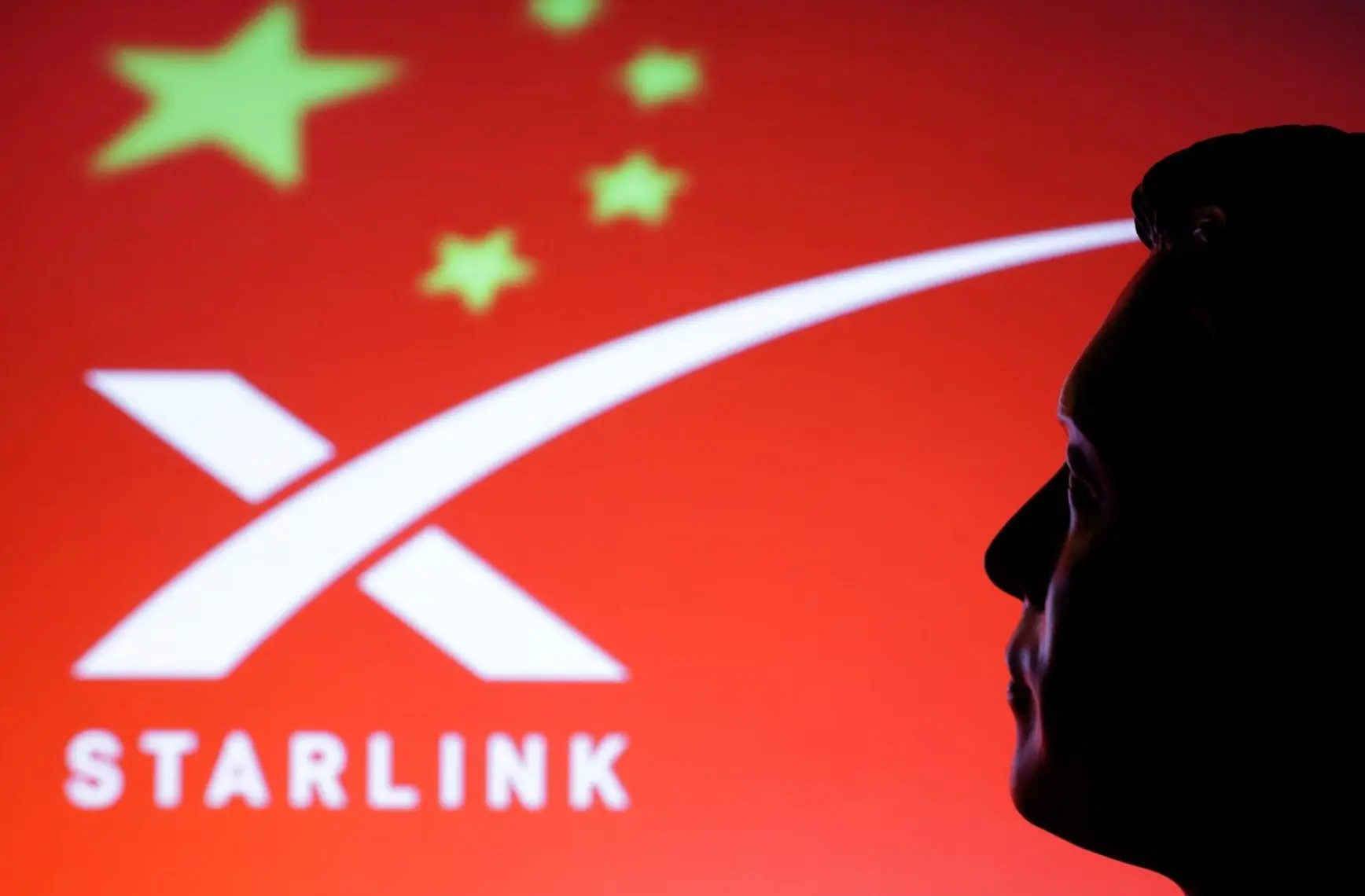
Elon Musk’s Starlink satellite network is facing increasing challenges in maintaining its dominance in high-speed satellite internet against a state-backed Chinese competitor and another service funded by Amazon founder Jeff Bezos.
In November 2024, Shanghai-based SpaceSail signed an agreement to enter Brazil and announced that it was in negotiations with over 30 countries. Two months later, SpaceSail began operations in Kazakhstan, according to the Kazakhstan Embassy in Beijing.
The Brazilian government is also in talks with Jeff Bezos’ Project Kuiper and Canada’s Telesat for satellite internet services, according to an official involved in the negotiations. This is the first time these discussions have been publicly disclosed.
Since 2020, Starlink has launched more low Earth orbit (LEO) satellites—positioned at altitudes below 2,000 km—than all of its competitors combined. Satellites at this altitude transmit data with high efficiency, delivering high-speed internet to remote communities, maritime vessels, and military forces in war zones.
China views Starlink’s dominance in space as a threat. The country has been heavily investing in domestic competitors to Starlink and funding military research into tools for tracking satellite constellations, according to corporate filings and academic studies.
In 2024, China launched a record 263 LEO satellites, according to data from astrophysicist Jonathan McDowell, analyzed by tech consulting firm Analysys Mason.
The emergence of Starlink’s competitors has been welcomed by the Brazilian government, which seeks high-speed internet for remote areas but has clashed with Elon Musk over business and political matters.
SpaceSail declined to comment on Reuters’ inquiries about its expansion plans. However, a newspaper controlled by China’s telecommunications regulator last year praised SpaceSail’s potential to “overcome national borders, penetrate sovereignty, and achieve unconditional global coverage—strategic capabilities that the nation must master.”
Project Kuiper, Telesat, Starlink, and Brazil’s Ministry of Communications did not respond to Reuters’ requests for comments.
Few international competitors to Elon Musk have ambitions as large as SpaceSail, which is controlled by the Shanghai municipal government. SpaceSail has announced plans to deploy 648 LEO satellites in 2025, with a potential expansion to 15,000 satellites by 2030. Currently, Starlink operates around 7,000 LEO satellites and aims to reach 42,000 by the end of the decade.
SpaceSail’s launches will form the Qianfan (Thousand Sails) constellation, marking China’s first major international step into satellite broadband. Three other Chinese satellite constellations are also in development, with plans to launch 43,000 LEO satellites in the coming decades and invest in rockets capable of carrying multiple satellites at once.
"China’s ultimate goal is to secure as many orbital slots as possible," said Chaitanya Giri, a space technology expert at the Observer Research Foundation (ORF).
The Observer Research Foundation is an Indian think tank that analyzes and provides recommendations on foreign policy, national security, economics, technology, and global affairs. Established in 1990, ORF is now one of the most influential research institutions in India and globally, collaborating with governments, scholars, and businesses to study geopolitical trends, space technology, cybersecurity, energy, climate change, and international issues.
As part of its satellite internet competition research, ORF has analyzed China’s and other global powers’ strategies for expanding LEO constellations and their impact on space security and global policy.
China’s growing presence in LEO has raised concerns among Western policymakers, who fear it could enable Beijing to exert greater control over global internet infrastructure. In a February report, researchers from the American Foreign Policy Council wrote that the U.S. should enhance cooperation with Global South nations if it “seriously intends to counter China’s increasing digital influence.”
The report also described the Qianfan constellation as a critical component of China’s Belt and Road Initiative (BRI). The $1 trillion infrastructure plan, championed by Chinese President Xi Jinping, has been criticized as a tool for expanding China’s geopolitical influence.
China’s Ministry of Commerce and its telecommunications regulator did not respond to Reuters’ inquiries. The Chinese Ministry of Foreign Affairs stated that it had no specific information regarding SpaceSail’s overseas expansion but emphasized China’s commitment to space cooperation for shared benefits.
SpaceSail has positioned itself as a provider of reliable internet access, particularly for remote areas and in emergency or disaster situations.
Starlink’s rapid expansion and its use in the Ukraine-Russia war have drawn significant attention from Chinese military researchers, leading to increased state funding for rival satellite networks.
Hongqing Technology, founded in 2017 and developing a 10,000-satellite constellation, raised 340 million yuan ($47 million) in February from investors primarily affiliated with the Chinese government. In 2023, SpaceSail secured 6.7 billion yuan ($930 million) from a state-backed investment fund to enhance China’s satellite manufacturing capabilities.
Chinese researchers, including many with ties to the People’s Liberation Army (PLA), have also intensified their focus on LEO technology. In 2023, China filed a record 2,449 LEO satellite technology patents, a massive increase from just 162 in 2019, according to AcclaimIP, a database managed by Anaqua.
Many of these patents focus on cost-effective satellite networks and low-latency communication systems, according to a Reuters analysis, highlighting China’s efforts to close the technology gap with the U.S.
"The space industry is evolving rapidly, with pioneers exploiting the current regulatory freedom to claim strategic positions before stricter rules are enforced—similar to the Wild West era," said Antoine Grenier, Global Space Director at Analysys Mason.
Some Chinese research appears directly targeted at Starlink. A PLA patent application described Starlink as a “key element of military reconnaissance and communications, posing security threats in cyberspace, data transmission, and military operations.”
China is also developing tools to track and monitor Starlink’s satellite constellation. In a January study, researchers from two PLA-affiliated institutes claimed to have designed a system and algorithm to track large satellite constellations like Starlink. Their approach was inspired by how humpback whales encircle prey by swimming in spirals and creating vortex-like bubbles.
"With the increasing militarization of space, developing monitoring and tracking tools for these massive satellite constellations is critically important," the researchers wrote.